

Located at 161 East Bay Street, the F.W. Wagener Building is a beautiful structure in Charleston, South Carolina, with tall arched windows and cast-iron pillars. Built in 1880 by German immigrant F.W. Wagener, it housed his firm’s offices, a grocery store, and rental space across three expansive, open floors.
The Poirier family built much of their wealth by renting office space from Wagener and using his firm to broker their cotton sales. In 1881, farmers grew so much cotton that prices dropped. The Poirier family was prepared because they had secretly invested in other assets along the way. However, their son George wasn’t cut from the same smart-decision-and-financial-cloth, and when he took over, he began to bleed green, fast.
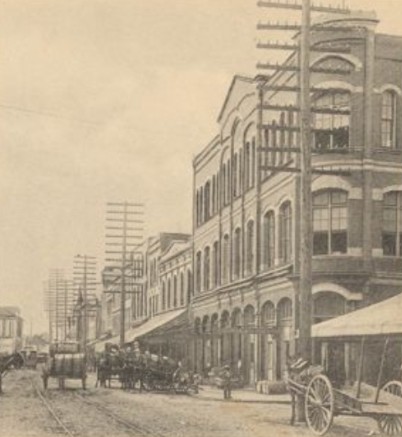
In 1885, a boll weevil infestation devastated many cotton crops in the area, leaving George overwhelmed and desperate. George, down on his luck, tried to settle his debts by selling his last harvest to the British. Once his cotton was loaded onto a ship bound for England, he ran to his third-floor office in the Wagener Building and watched through the windows as his cargo was loaded and finally sailed away.
Unfortunately, George’s bad luck continued when he saw smoke billowing from the ship. A sailor onboard had lit a pipe and accidentally set the freight ablaze, destroying the entire shipment. George pressed his head against the glass and screamed in anger as the crew dove into the waters to save themselves from the burning boat.
George stacked office furniture in the corner of the room, placing a captain’s chair on top, and tied a rope to the rafters. All of the money was gone, and so was George, as he ended his life.
The next day, a newsboy screamed in horror, drawing attention to the third floor of the Wagener Building, where George’s body dangled in the morning sunlight.
Over the years, people have reported seeing shadows and inexplicable cold drafts on the third floor. Some believe that George’s physical life may have ended there, but his spirit is still very much alive.
Written By John G. Clark Jr.