

Madame Delphine MacCarthy Lalaurie, a prominent and wealthy socialite in New Orleans, gained infamy for her cruel treatment of enslaved individuals. In 1832, she and her third husband, Dr. Leonard Louis Nicolas Lalaurie, moved into a grand neoclassical mansion at the corner of what are now Royal and Governor Nicholls Streets. The mansion became famous for its extravagant parties, but rumors of Madame Lalaurie’s horrific abuse gradually began to circulate throughout the community.
Historian Carolyn Marrow Long notes that in 1828, authorities first investigated Madame Lalaurie for cruelty toward enslaved people. While no court records from this inquiry have survived, other documents confirm that she paid for legal representation and subsequently sold several enslaved individuals in the aftermath.
On April 10, 1834, a fire erupted at the Lalaurie mansion, drawing a crowd of onlookers as the flames consumed the house. The city’s French-language newspaper, The New Orleans Bee, reported that firefighters discovered “seven slaves, more or less horribly mutilated” locked inside while battling the blaze. The Bee condemned the “barbarous and fiendish atrocities committed by the woman Lalaurie upon the persons of her slaves.” Firefighters escorted the survivors to the Cabildo for safety.
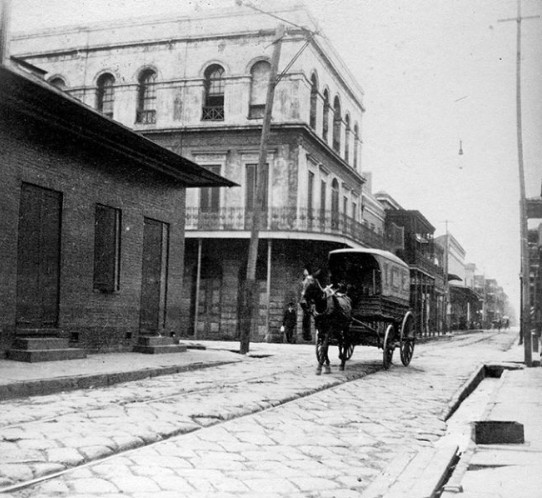
News of Madame Lalaurie’s atrocities quickly provoked outrage among her neighbors. The Bee reported that a crowd of 4,000 gathered at the Cabildo. In their fury, neighbors ransacked the Lalaurie mansion, destroying what remained after the fire. The Lalauries escaped to Lake Pontchartrain and eventually settled in Paris. Madame Lalaurie died in Paris, though it is believed her remains were returned to New Orleans and interred at St. Louis Cemetery.
The structure at 1140 Royal Street today was built in 1838 as a private residence and later used as a school and apartments. It is also rumored to be one of the most haunted places in New Orleans.
Written By John G. Clark Jr.